
The FCC’s 4.9 GHz Eighth Report & Order, released on October 22, 2024 in WP Docket No. 07-100, represents a significant change in the way that public safety spectrum is allocated. By assigning responsibility for spectrum use and management to a Band Manager under a lease and spectrum manager format, the FCC has taken a step toward utilizing the spectrum management tools traditionally used for private spectrum in the public safety space.
The 4.9 GHz Band (4940-4990 MHz)
This band has been used over the past twenty years by public safety agencies (including 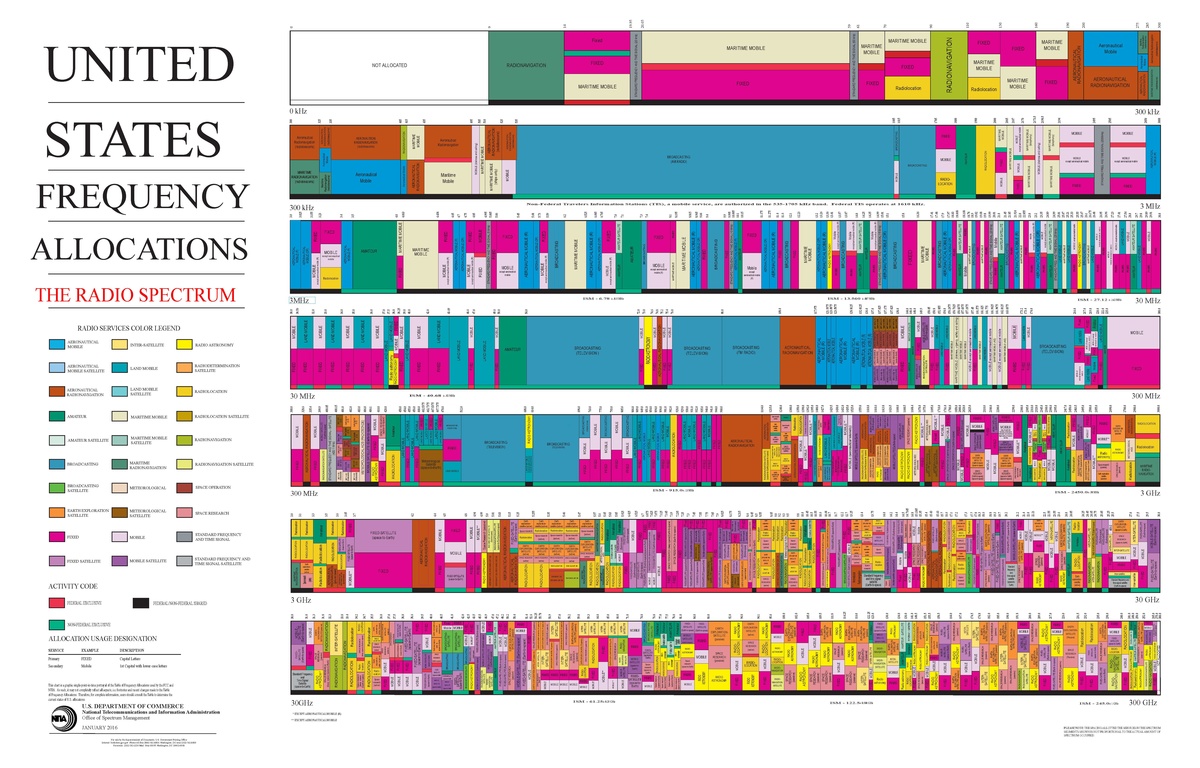 nongovernmental organizations in certain circumstances) for a variety of activities for mobile, fixed point-to-point or fixed point-to-multipoint operations. With 50 MHz available in the band, operations of a variety of bandwidths is presently the norm.
However, the FCC believes that the band is underutilized. For this reason, the Commission opened a proceeding to look at a variety of methodologies to expand usage of the band, including making it available for unlicensed devices, and issued a Sixth Further Notice of Proposed Rulemaking in 2018.
The 4.9 GHz Eighth Report & Order Changes:
The FCC will create a nationwide “overlay” license, which will be assigned to a Band Manager. The Band Manager will be responsible for: (1) Entering into a nationwide spectrum sharing lease with FirstNet; (2) frequency coordination and interference protection for incumbent licensees; (3) managing the spectrum sharing agreement with FirstNet; (4) encouraging technological innovation in the band; and (5) filing an Annual Report with the FCC. The Band Manager may not be a system operator.
A committee to select the Band Manager, the criteria for the Band Manager’s selection, the specifics of the Band Manager’s responsibilities, how the Band Manager gets compensated, etc. will be handled by the FCC’s Public Safety and Homeland Security Bureau, in conjunction with the FCC’s Wireless Bureau.
Important Notes For Incumbent Licensees: (1) incumbents may continue to operate indefinitely, with their existing technology (or any other technology for that matter); (2) there is a full freeze on new or amended licenses for incumbents (and no new licensees); and (3) geographic licensees will have a period of time to go into the FCC’s Universal Licensing System, and designate the location and technical parameters of their existing operations (after which period the FCC’s will cancel the geographic license and issue a site specific license).
While the freeze restricts the ability of incumbents to expand their geographic service areas, there does not appear to be an absolute preclusion from allowing such expansion by the band manager at some point in the future (although one anticipates that would be a long time from now), which will certainly be subject to the provisions of the Band Manager – FirstNet lease. Specifically, the FCC said that “[W]e also clarify that FirstNet remains free to enter into additional sharing agreements with incumbent licensees to operate within their service areas consistent with section 90.1203(b) of the Commission’s Rules.” There is no specific definition of “service area” (i.e. where the licensee presently operates a radio system, or the geographic area where the licensee provides public safety services).
With regard to the type of operations permitted in the band, the band remains for public safety operations. Section 90.1203(b) states:
4.9 GHz band licensees eligible pursuant to paragraph (a) may enter into sharing agreements or other arrangements for use of the spectrum with entities that do not meet the eligibility requirements in this section. However, all applications in the band are limited to operations in support of public safety.
However, while the Commission declined to allow non-public safety operations in the band, it added not “at this time.”
Section 90.1203(a) states:
Entities providing public safety services (as defined in § 90.523) are eligible to hold a Commission license for systems operating in the 4940-4990 MHz band. All of the requirements and conditions set forth in § 90.523 also govern authorizations in the 4940-4990 MHz band.
The FCC declined to adopt a harmful interference standard, and declined to specify that incumbents must use a specific type of technology. These two decisions are consistent with GWTCA’s recommendations.
It should be noted that the FCC’s Order did not have any dissenting Commissioners, with four Commissioners voting for the Report & Order. However, Commissioner Gomez did not participate in the proceeding.

 GWTCA
GWTCA 